
The May Fertilise
The May Fertilise.
Last Chance.
There are four fertilise windows in a Perth lawn calendar. Two of them are important. One of them is critical.
The April/May feed is the one most homeowners either miss entirely or don't take seriously enough. It isn't about pushing growth. By May, the lawn is slowing down and you're not trying to green it up. It's about building root depth and energy reserves before growth stops, so the lawn has the resources to hold its colour through winter and come back strongly the moment conditions improve in spring.
Skip it and your lawn goes into winter running on empty. It will still survive, but it will be thinner, paler and slower to recover than a lawn that was properly fed in May.
Fertilise this weekend if you haven't already. May is the closing window. Once soil temperatures drop below 14°C, fertiliser uptake slows significantly and you lose most of the benefit. In Perth, that typically happens in late May or early June depending on the year.
If you applied a feed in April, a light liquid top-up in May is still worthwhile. If you haven't fertilised since summer, this weekend is urgent.
Why the May fertilise matters more than any other
What to apply — and the difference between granular and liquid
The choice between granular and liquid fertiliser in May comes down to what you're trying to achieve and how quickly you want results. Both are effective. They work best used together.
Granular fertiliser — the base feed
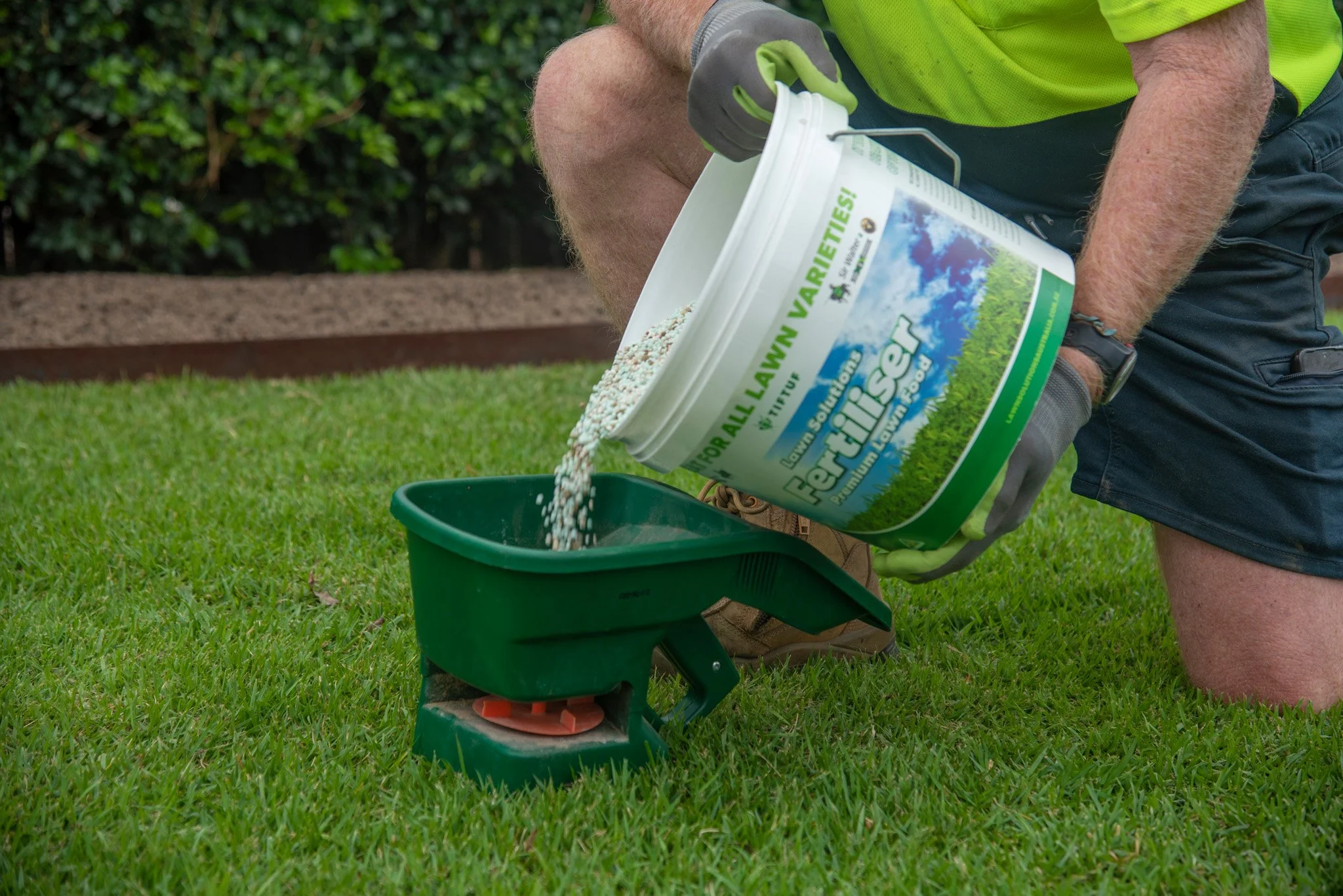
A granular fertiliser with controlled-release nitrogen is the most reliable base for a May feed. The controlled-release component feeds steadily over 6 to 8 weeks, meaning the lawn continues to receive nutrients as temperatures drop and uptake slows. Apply at no more than 2kg per 100m², water in well and let it work. The lawn won't visibly green up overnight. That's not the point. The work is happening underground.
Liquid fertiliser — the colour boost
If winter colour is a priority, a liquid fertiliser applied as a foliar spray delivers iron and nitrogen directly through the leaf blade, bypassing any soil uptake issues. Results are visible within days. Used alongside a granular base feed, a liquid application in May gives you both the immediate colour response and the longer-term root nutrition. Used on its own, the effect is faster but shorter-lived.
Variety-specific May fertilising notes
| Variety | May Fertilising Notes | Rate |
|---|---|---|
| Sir Walter Buffalo | Responds well to a May feed. Iron is particularly effective for maintaining the deep green colour through winter. Avoid high nitrogen rates, as it is not needed and can promote soft growth vulnerable to disease. | 1-2kg/100m² granular |
| TifTuf Hybrid Couch | Feed early in May while soil is still warm enough for uptake. TifTuf goes more dormant in winter than buffalo. A good May feed reduces the extent of browning and speeds spring green-up considerably. | 1-2kg/100m² granular |
| Zoysia Australis | Lower nutrient demand than other varieties. A light May feed is sufficient. Focus on potassium for stress resistance rather than nitrogen for growth. Liquid iron application gives good colour response. | 1kg/100m² granular |
| Nullarbor Couch | Similar to TifTuf, and benefits from an early May granular feed before growth slows completely. Potassium is valuable for winter hardiness. Avoid heavy nitrogen application at this time of year. | 1-2kg/100m² granular |

While you're out there — two more quick jobs
If you're applying fertiliser this weekend, it takes less than five extra minutes to do two other tasks that matter just as much heading into winter.
Raise your mowing height
If you haven't already adjusted for winter, do it now. A higher cut gives the lawn more leaf surface to photosynthesise in shorter days and lower light. It also protects the crown from cooler temperatures. Sir Walter should be sitting at 30-40mm through winter, TifTuf at 20-30mm. Run the mower at a higher setting this weekend and leave it there until September.
Check for any remaining dry patch
Pour a small amount of water on any pale or yellowing patches and watch whether it soaks in or beads off. Hydrophobic soil repelling water in May will still cause problems through winter rain events, with water sitting on the surface rather than penetrating causes disease pressure and root death. If you find it, apply a wetting agent before the winter rains arrive.
Recommended products for your May lawn program



Don't miss the window
Feed your lawn
this weekend.
The May fertilise window closes when soil temperatures drop below 14°C, typically late May to early June in Perth. Everything you need is available online with delivery across Perth, or come in to our Wangara store and talk to the team.