
September Lawn Care
Spring Has Arrived.
Here's What to Do.
September is when Perth lawns wake up. After three months of slowed growth, reduced colour and minimal activity, soil temperatures climb back through the 15 to 20 degree range and warm-season grasses respond almost immediately. Growth accelerates, colour returns and the lawn starts demanding attention again.
It is also the most popular month for new turf installation in Perth — and for good reason. Spring installations benefit from warming conditions, longer daylight hours and the full growing season ahead before summer arrives. A lawn laid in September has everything it needs to establish quickly and arrive at its first summer already deeply rooted.
Whether you're maintaining an existing lawn or planning a new one, September is one of the most productive months you can put into your garden. Here's exactly what to do.
Fertilise: Spring feed with a nitrogen-boosted granular to fuel the growth surge. Follow up with a liquid in two to three weeks.
Pre-emergent: Apply now to stop summer weeds before they germinate. This is the September job most people forget.
Reticulation: Check your system before the hot weather arrives. Fix it now, not in December.
Mowing: Increase frequency as growth accelerates. Lower the height gradually toward your summer setting.
New turf: September is one of the best months to lay. Warm conditions, fast establishment and the full summer ahead.

Why September orders are surging
We see it every year without fail — Sir Walter Buffalo enquiries and orders spike sharply in September. It is consistently our biggest month for new turf sales, and the reason is straightforward: September is genuinely the best time to lay turf in Perth.
Soil temperatures are warm enough to drive rapid root establishment but not yet at the peak summer levels that stress new turf before it has anchored. The Water Corporation's spring watering exemption gives new lawns up to 42 days of unrestricted irrigation during the critical establishment window. And with the full growing season ahead, a lawn laid in September arrives at its first Perth summer already established, deeply rooted and far more resilient than a mid-summer installation.
If you have been thinking about a new lawn — replacing a tired old one, adding turf to a renovation project or simply starting fresh — September is the month to act. Delay past November and you are installing into increasingly hot conditions with a compressed establishment window before the hard months arrive.
The September task list
September is the second most important fertilising window of the Perth lawn year, behind only the autumn feed. As soil temperatures climb through 18 to 20 degrees, grass moves from recovery into active growth and its demand for nitrogen, potassium and trace elements increases significantly.
Apply a granular fertiliser with a higher nitrogen content in early September to fuel this growth surge. Unlike the balanced autumn feed, the spring application can lean toward nitrogen to push shoot growth, colour and lateral spread. Follow with a liquid fertiliser two to three weeks later for a sustained colour boost as growth peaks in October.
Do not over-apply nitrogen. Lush, soft growth is more vulnerable to disease and pest damage heading into the warmer months. Apply at the recommended rate and resist the urge to double up.
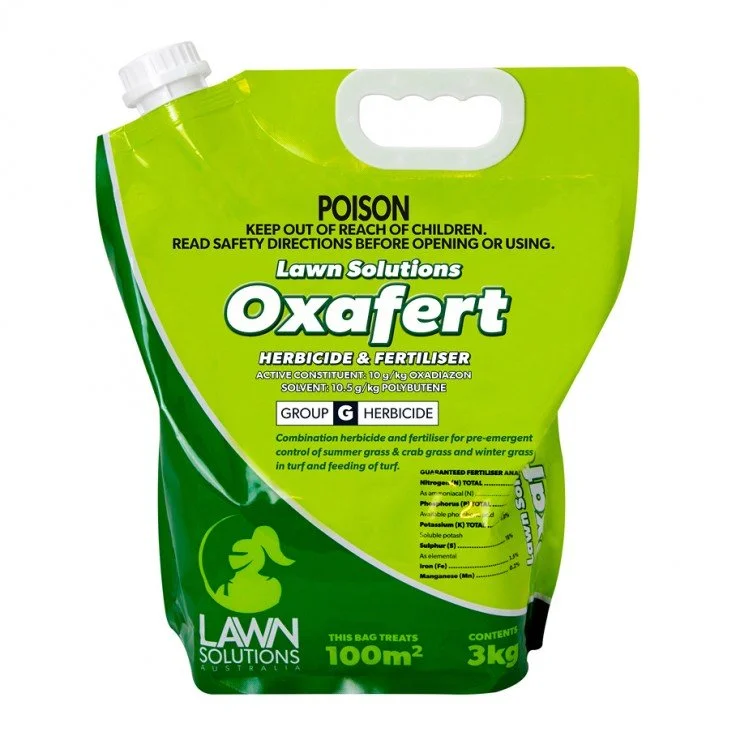
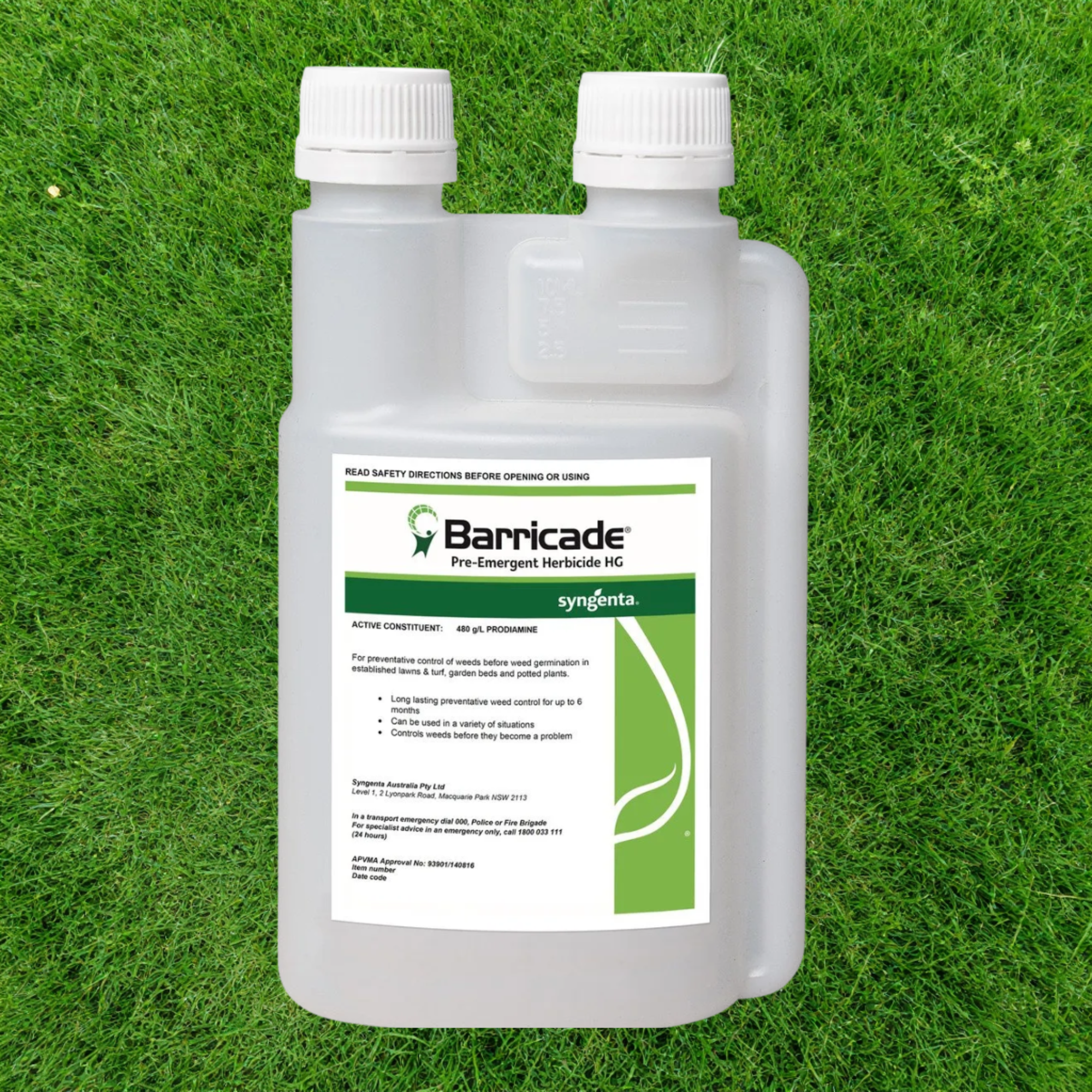
This is the September task most Perth homeowners overlook entirely. The winter pre-emergent applied in May or June targeted wintergrass and oxalis. September requires a second pre-emergent application targeting a completely different set of summer weeds — crabgrass, summer grass and crowsfoot — that germinate as soil temperatures push above 18 to 20 degrees.
The window for this application is narrow. Once soil temperatures are consistently above that threshold, the seeds have already begun germinating and a pre-emergent will have no effect on that generation. Apply in early to mid-September, before Perth hits its first consistent warm stretch, and water in immediately after spreading.
OxaFert combines the pre-emergent with a spring fertiliser application, making it the most efficient choice for September — one product handling two of the most important tasks of the month at the same time.
Perth's mandatory sprinkler switch-off period ends on 31 August. September is the last comfortable opportunity to check your retic system before summer arrives — run every station, check for blocked, broken or misaligned heads, inspect valve boxes and confirm your controller is programmed correctly for the transition into spring watering.
Finding a broken head or faulty valve in September is a minor inconvenience. Finding the same problem in January when your lawn is under heat stress is a genuine crisis. The 30 minutes spent checking your system now is the best investment you can make in your lawn's summer performance.
If you have recently laid new turf or are planning to lay in September, make sure the system covers the new area evenly before the turf goes down. Adjusting or adding heads after installation is disruptive to a newly established lawn.
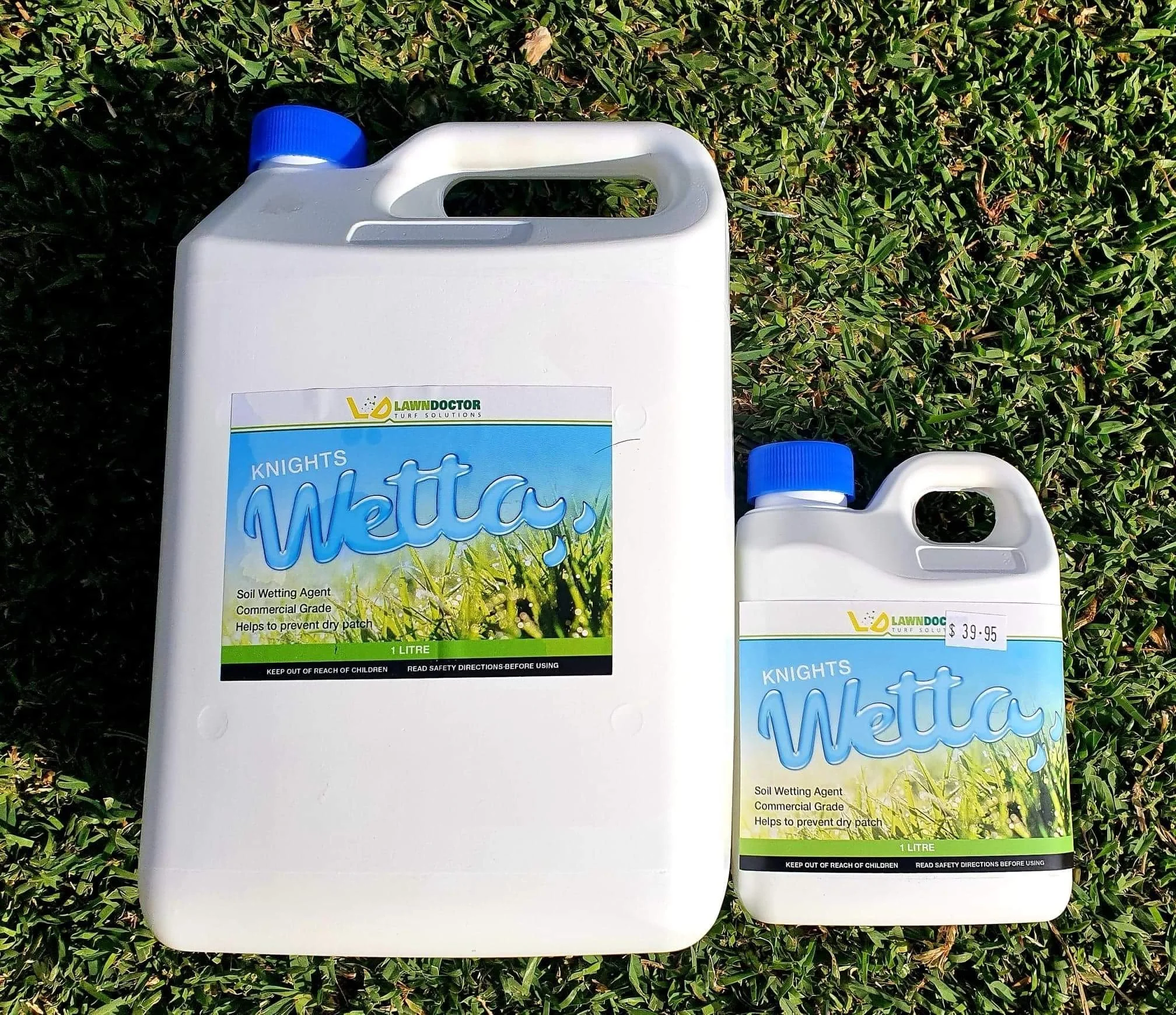
If you didn't apply a wetting agent in August, September is your last window to do it preventatively before dry conditions take hold. Perth's sandy soils begin to dry and set hydrophobic through October and November — once the coating forms on soil particles, it takes a corrective treatment to break it down rather than a maintenance one.
A preventative wetting agent applied in September works with the still-moist soil to maintain even water distribution through the profile as temperatures rise. It will not prevent dry patch entirely, but it significantly delays onset and reduces severity through the first half of summer.
Plan to reapply every 6 to 8 weeks through the growing season. Mark the dates in your phone now so it doesn't get forgotten in the busyness of summer.
As growth accelerates through September, mowing frequency needs to increase to match. A lawn that needed cutting every three weeks in July may need cutting weekly by the end of September. Letting the lawn get too long before mowing and then cutting it back hard removes too much leaf at once, stresses the plant and produces an uneven, yellowed result.
The one-third rule applies year-round: never remove more than one third of the leaf height in a single mow. If the lawn has gotten ahead of you, bring it back down over two or three mows rather than one. Continue lowering the mowing height gradually toward your summer setting — most varieties should be at their summer height by mid-October.
Check your mower blade is sharp. A dull blade tears the leaf rather than cutting it cleanly, leaving a ragged brown tip that dulls the lawn's appearance even when it is otherwise healthy. Sharpen or replace at the start of each spring season.
September is the ideal window for vertimowing or scarifying in Perth. Active growth means the lawn can recover quickly from the process, and removing accumulated thatch now means the spring fertiliser and wetting agent applications reach the soil rather than sitting in a fibrous mat above it.
Thatch is the layer of dead organic matter that builds up between the green leaf surface and the soil. A thin thatch layer is normal and beneficial. A thick one impedes water, air and nutrient movement, provides habitat for pests and disease and produces a spongy, uneven surface underfoot.
After vertimowing, the lawn will look temporarily rough. Apply a top dressing, water in well and fertilise. Most well-established lawns recover to a clean, even surface within two to three weeks — greener and healthier than before.
September mowing heights by variety
| Variety | Current Setting (Aug) | Target by Mid-Oct | Notes |
|---|---|---|---|
| Sir Walter Buffalo | 35-50mm | 25-35mm | Lower gradually — one notch per mow. Buffalo is forgiving but scalping causes stress. |
| TifTuf Hybrid Couch | 20-30mm | 15-25mm | Can be lowered more quickly than buffalo. Increase mowing frequency as growth surges. |
| Zoysia Australis | 25-35mm | 20-30mm | Slower growth means less frequent mowing even in spring. Gradual reduction is fine. |
| Nullarbor Couch | 25-35mm | 20-30mm | Similar to TifTuf. Increase frequency as growth picks up through October. |
Products for your September program



Ready for a new lawn this spring?
Order fresh-cut turf
for September delivery.
All Lawn Doctor turf is AusGAP certified and cut fresh to order from our Gingin farm. Get a free quote online, visit our Wangara showroom to see all four varieties growing side by side, or call us and our team will help you choose the right variety for your block.